- For big rounds: a splitting maul hits harder and wedges wider
- For most homes: a 28–36 inch splitting axe is easier to swing
- Fiberglass handles reduce vibration and need less care than wood
- Split on a steady block and keep feet clear of the swing path
- Eye protection helps against chips and flying bark
If you want the best axe for splitting wood in the USA, focus on a proper wedge-shaped head, a handle length you can control, and a weight you can swing for more than a few minutes. A splitting axe is usually easier for steady sessions, while a maul is made for stubborn, knotty rounds. If you also cut rounds before you split, see the best chainsaw for homeowners. For lighter yard work and limb cleanup, the best tool for cutting tree branches can help.
| Pick | Type | Length | Weight | Good For | Keep in mind |
|---|---|---|---|---|---|
| Fiskars X27 | Splitting Axe | 36″ | ~6.3 lb | Medium to large logs | Long handle = strong leverage |
| Gränsfors Bruk Splitting Maul | Maul | 31.5″ | ~7 lb | Thick, knotty rounds | Heavier swing, faster splits |
| Fiskars IsoCore 8 lb Maul | Maul | 36″ | ~10.4 lb | Fewer hits per log | Can tire your back sooner |
| Estwing Camper’s Axe | Axe | 26″ | Varies | Camping + kindling | Shorter reach, easier to pack |
| LEXIVON V36s | Splitting Axe | 36″ | ~7.6 lb | Home firewood stacks | Can feel head-heavy |
| Husqvarna 28″ Splitting Axe | Splitting Axe | ~28″ | ~6–8 lb | Shorter handle fans | Strong hit, heavier carry |
Top Picks
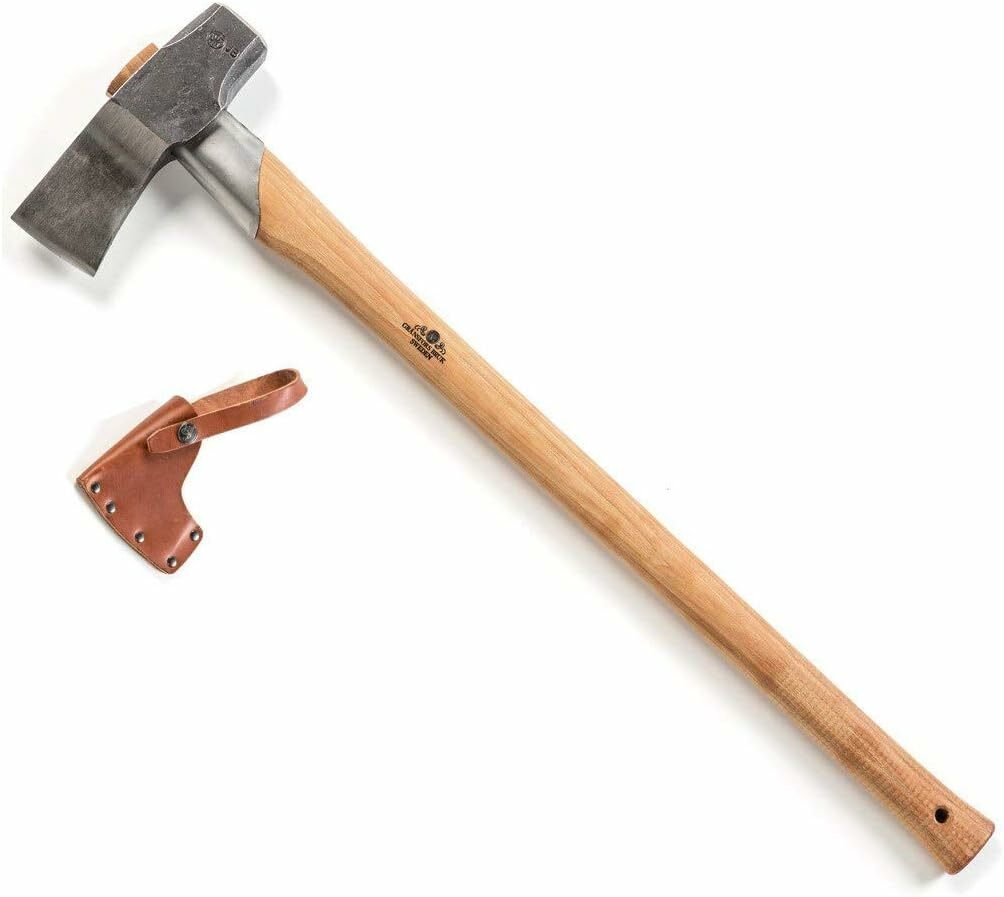
Gränsfors Bruk Wood Splitting Axe
This maul is built for tough rounds where a regular axe may stick or bounce. The wedge shape helps push fibers apart, and the shorter overall length can feel easier to control when splitting on a block at a fixed height.
| Pros | Cons |
|---|---|
| Splits large rounds fast | Heavier swing for long sessions |
| Sheath included | Shorter handle than many full-size splitters |
| Long warranty (per your notes) | Not ideal for one-hand work |
- Color: Brown and silver
- Size: 31.5″ (blade), 5.5″ (width)
- Weight: 7 lb
- Material: Alloy Steel, Leather, Wood
- Usage: Splitting thick and knotty chunks of wood
- Style: Maul
Fiskars Super Splitting Axe
The X27 is a common choice for home firewood because the long handle helps you generate force without a massive head. The handle design also helps reduce vibration, which matters when you are splitting a full stack.

| Pros | Cons |
|---|---|
| Long handle helps power | Heavy to carry far |
| Reduced vibration feel | Not made for one-hand use |
| Good for medium to large logs | Can feel big for shorter users |
- Brand: Fiskars
- Size: 36″
- Handle: Shock-absorbing
- Blade: Alloy Steel
- Style: Super Splitting Axe
- Color: Black
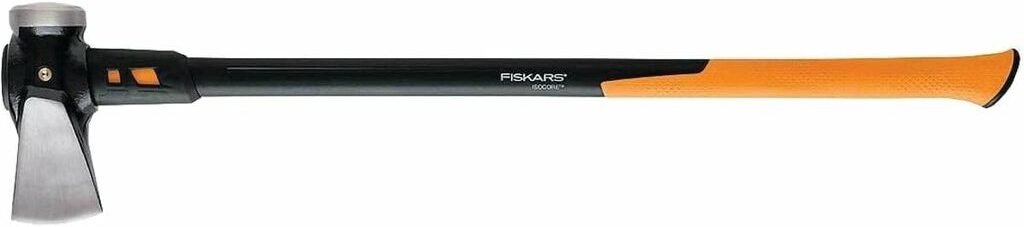
Fiskars Wood Splitting Maul
If you want fewer swings per log, a heavier maul can help because it drives deeper and wedges wider. The trade-off is fatigue, so it suits shorter, focused splitting sessions more than marathon days.
| Pros | Cons |
|---|---|
| Often splits in fewer hits | Takes more storage space |
| SoftGrip helps comfort | Weight can strain your back over time |
| Good for wedges and big rounds | Not fun to carry long distances |
- Weight: 10.4 pounds
- Handle: 36″L x 7.75″W
- Blade: Sharp alloy steel
- Usage: Splitting Wood
- Style: Pro IsoCore 8lb
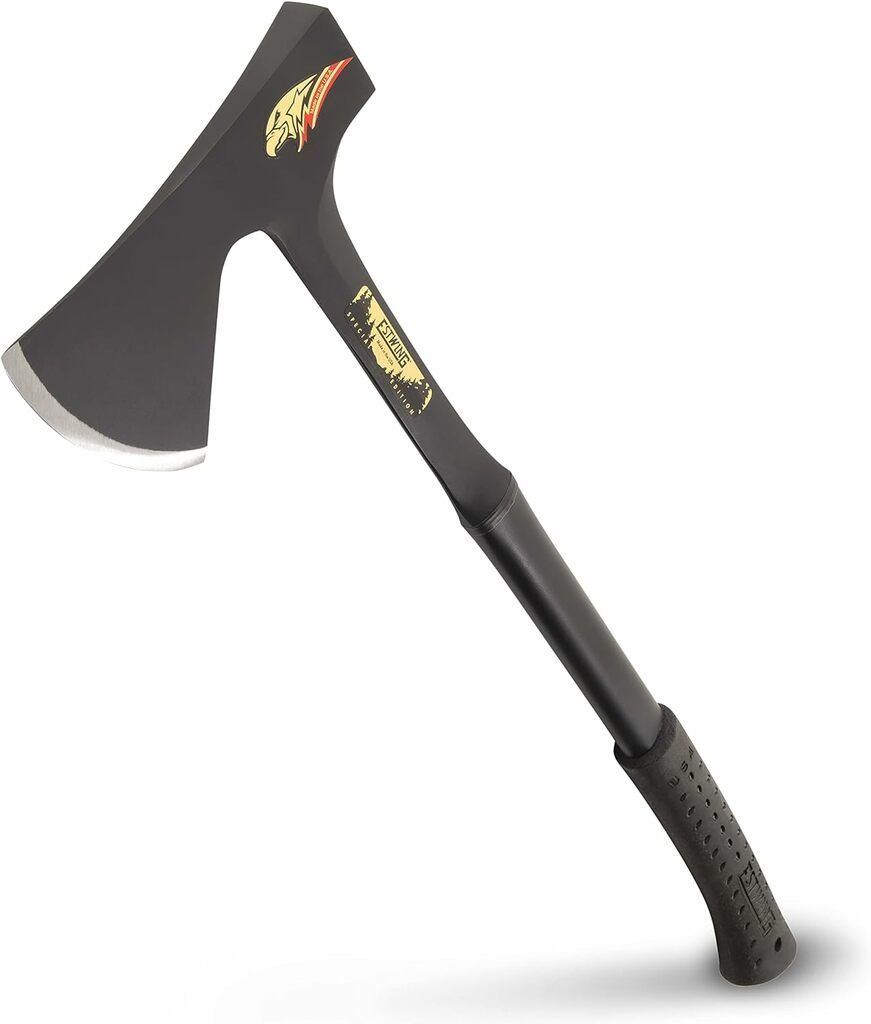
Estwing Shock Reduction Axe
This is a practical choice for camping and lighter splitting when you want an all-steel tool that can handle rough use. It will not replace a full-size splitter for big rounds, but it fits well for kindling and smaller pieces.
| Pros | Cons |
|---|---|
| All-steel build | Heavier than it looks |
| Good balance for controlled hits | Shorter length limits leverage |
| Useful for kindling and camp wood | Not meant for huge rounds |
- Type: Tool
- Size: 26″L x 7″W
- Blade Length: 4 Inches
- Gender: Unisex-Adult
- Design: Black Special Edition
- Recommended: Chopping, Splitting firewood & kindling
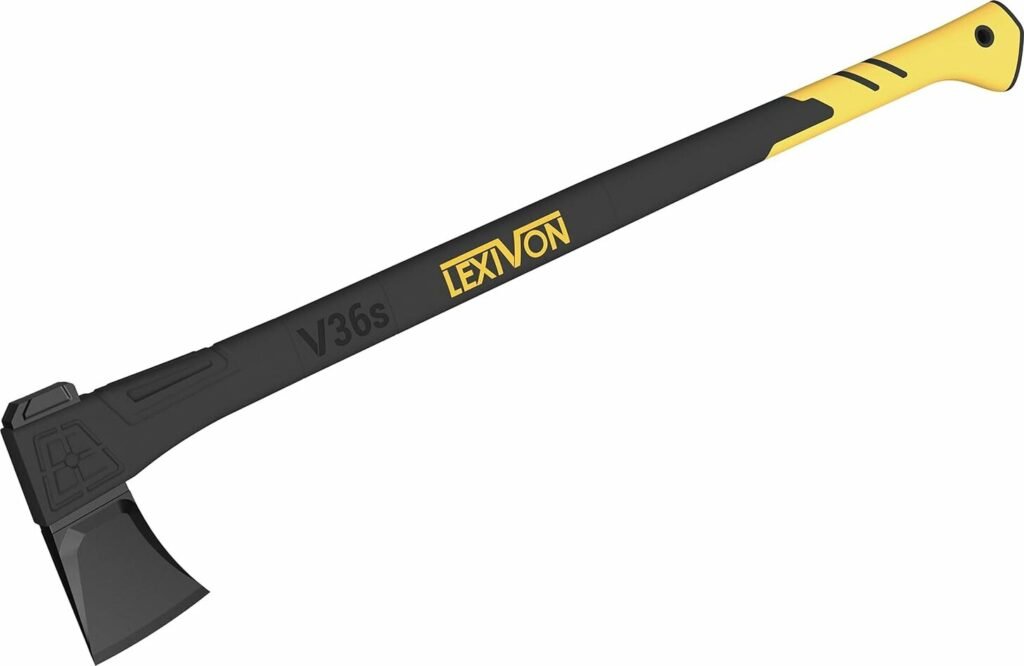
LEXIVON Carrying Sheath Axe
This is a home-friendly splitter with a long fiberglass handle and a sheath for storage. The head-heavy feel can help split power, but it may take a few sessions to get used to the swing path.
| Pros | Cons |
|---|---|
| Fiberglass handle resists cracking | Head-heavy swing feel |
| Sheath included | Not great for tight spaces |
| Comfort grip for longer use | Weight can feel high for some users |
- Size: 1″L x 1″W
- Category: Axes
- Weight: 7.6 pounds
- Grip: Ergonomic TPR
- Blade Material: Grade-A High Carbon
- Functions: Splitting
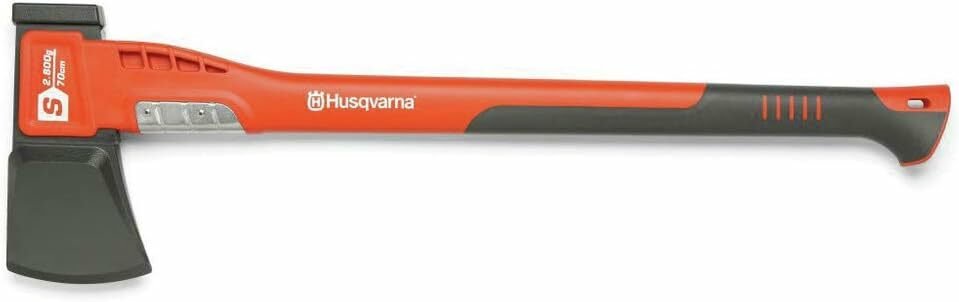
Husqvarna Steel Splitting Axe
This model is for people who want a shorter splitting tool that still hits hard. The fiberglass handle helps with vibration, and the head weight supports splitting, though the full setup can still feel heavy on long carries.
| Pros | Cons |
|---|---|
| Good power for its length | Heavy carry |
| Fiberglass helps with vibration | May feel short for taller users |
| Coated head helps reduce sticking | Not a one-hand tool |
- Material: Wood, Stainless Steel, Fiberglass
- Size: 27.6″L x 8.9″W
- Weight: 6.17 pounds
- Usage: Splitting
- Coating: Non-stick
- Type: Splitting Axe
How do you safely split a piece of wood with an axe?
Split on a flat, steady block, keep your stance wide, and aim for the center of the round (or a visible crack in the grain) while keeping your support hand away from the strike zone. Use controlled swings you can repeat, stop if you feel tired, and wear eye protection because chips and bark can fly. After you split, store the axe with a cover on the head and keep it out of reach of kids.
What type of axe is best for splitting logs?
A splitting axe or splitting maul is the right choice because the head is shaped like a wedge that pushes wood apart instead of cutting deeply. Choose a maul for thick, knotty rounds, and choose a splitting axe for longer sessions where you want less fatigue. Handle length matters too: longer handles add leverage, while shorter handles can feel easier to control.
What size axe blade should I use to split wood?
Blade size matters less than head shape and total swing feel, because splitting is about wedging, not slicing. A heavier head can reduce the number of hits needed, while a lighter head may feel easier for longer sessions. Pair that with a handle length you can control, and you will usually split faster with fewer stuck heads.
Why is having a flat blade essential for splitting wood?
A flatter, wedge-like blade face spreads force across the round and helps push fibers apart, reducing sticking and wasted swings. It also supports cleaner splits along the grain, especially when you aim for natural cracks. That shape is why splitting axes and mauls feel so different from felling axes.
FAQ
A: For many home users, a 36-inch splitting axe like the Fiskars X27 is a common pick because it balances leverage and control.
A: A maul is better for thick, knotty rounds because it hits harder and wedges wider, but it can tire you sooner.
A: Fiberglass handles resist cracking and reduce vibration, while wood handles have a classic feel but need more care.
A: Many people do well in the 28–36 inch range. Taller users often prefer 36 inches for leverage.
A: You can, but it may stick more often and split slower because the head shape is made for chopping, not wedging.
DISCLAIMER:
This blog post is for informational purposes only. We make every effort to provide accurate, current, and well-sourced information, but we cannot guarantee its completeness or absolute accuracy.
All images, videos, and logos used on bestfordaily.com are the property of their respective owners. We aim to credit and reference them appropriately. If you are the rightful owner and wish to have your image, video, or logo removed, please get in touch with us.