Quick Facts
- Coarse grits (40–80) are best for stock removal and leveling rough lumber.
- Medium grits (100–150) remove mill marks and prepare bare wood for finishing.
- Fine grits (180–240) are ideal for final sanding before stain or clear coat.
- Very fine grits (320–600+) are used between finish coats and for polishing.
- Aluminum oxide is the best all-round sandpaper for wood; silicon carbide suits wet sanding and finish work.
- Mesh and ceramic papers (like 3M Xtract and Cubitron II) last longer and resist clogging on big projects.
Smooth, even sanding can turn an average wood project into something that looks professionally finished. The correct grit and abrasive type matter just as much as your saws, clamps, or even your best paint brush for cabinets. This guide walks you through the best sandpaper for wood in 2026, how to pick the correct grit, and which products are worth your money.
Choosing the best sandpaper for wood starts with two questions: what stage of the project you’re in, and how you’re sanding (by hand or with a machine). The comparison table below gives you a quick look at the top options for 2026, from budget sheets to pro-grade mesh discs.
| Product | Type / Format | Grit Range | Best For | Approx. Price (2026) |
|---|---|---|---|---|
| 3M Xtract™ Cubitron™ II Mesh Discs | Mesh disc (hook & loop) | 80–320 | Dust-free power sanding on large wood surfaces | $40–$55 per 50-pack |
| 3M Cubitron™ II Hookit™ Sanding Discs | Film-backed disc | 80–400 | Fast stock removal and leveling with random orbital sanders | $35–$50 per 50-pack |
| Klingspor PS77 Sanding Discs | Aluminum oxide disc | 80–320 | General woodworking; furniture and cabinet work | $25–$40 per 50-pack |
| Mirka Abranet Mesh Sheets | Mesh sheet (hook & loop or hand block) | 80–400 | Detail sanding, curved profiles, dust collection setups | $30–$45 per 10-pack |
| Norton ProSand Sandpaper Sheets | Aluminum oxide sheet | 80–400 | Hand sanding and sanding blocks | $8–$15 per 20-sheet pack |
| 3M Wetordry™ Silicon Carbide Sheets | Wet/dry sheet | 320–1500 | Between-coat sanding and polishing finishes | $10–$18 per 10-sheet pack |
3M Xtract™ Cubitron™ II Mesh Discs
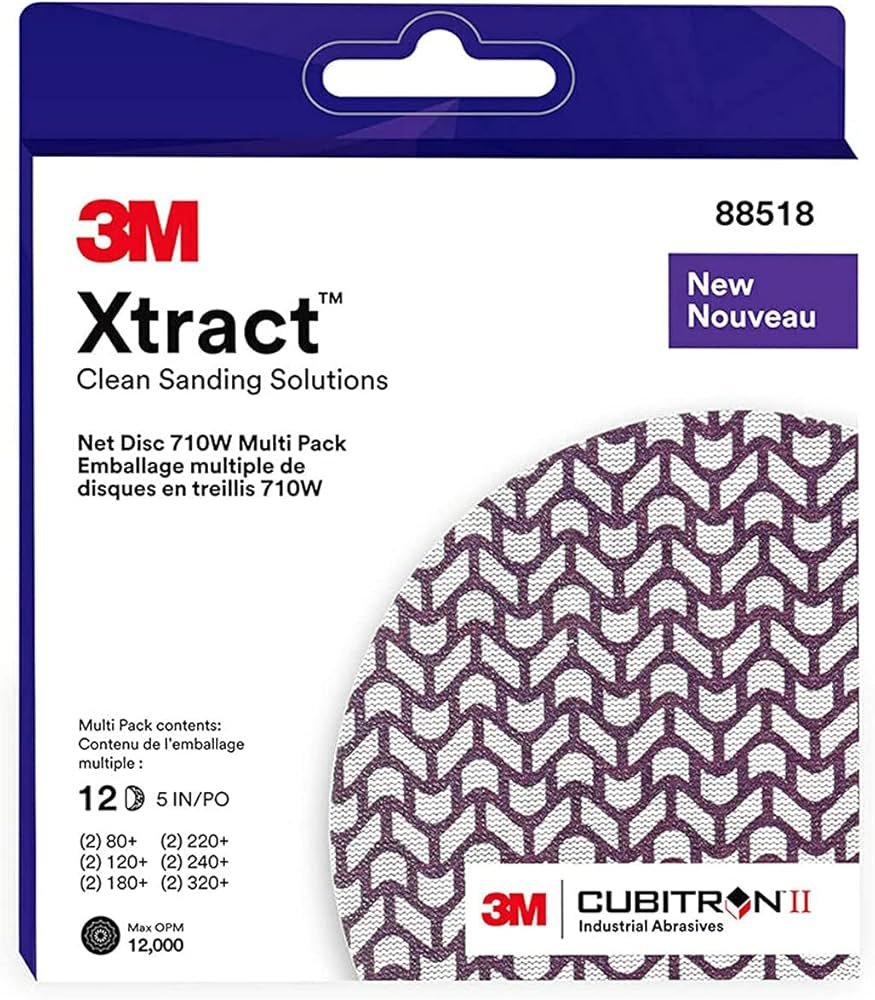
If you use a random orbital sander for most of your work, these mesh discs are hard to beat.
Why do they stand out
- Mesh backing gives excellent dust extraction with a shop vacuum
- Cubitron II ceramic grains cut fast and stay sharp longer
- Ideal for flattening slabs and tabletops before applying stain or brushing on finish with your best paint brush for cabinets
Use 80–120 grit for flattening panels, and 150–220 for final machine passes before hand sanding.
3M Cubitron™ II Hookit™ Discs
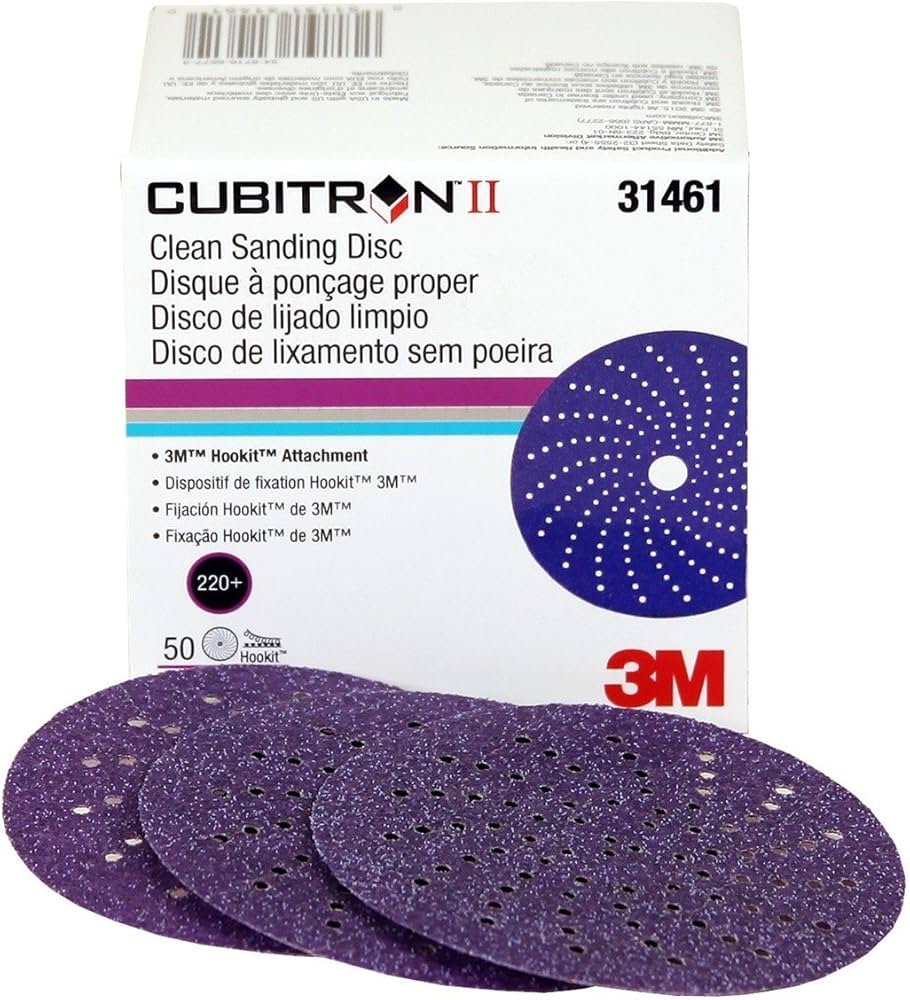
These discs are ideal for levelling panels, stripping old finishes, and removing saw marks. They are aggressive, so always follow with medium and fine grits to eliminate swirl marks before staining or finishing.
Best for
- Levelling glued panels
- Removing planer snipe and saw marks
- Sanding old finishes off solid wood before refinishing
Klingspor PS77
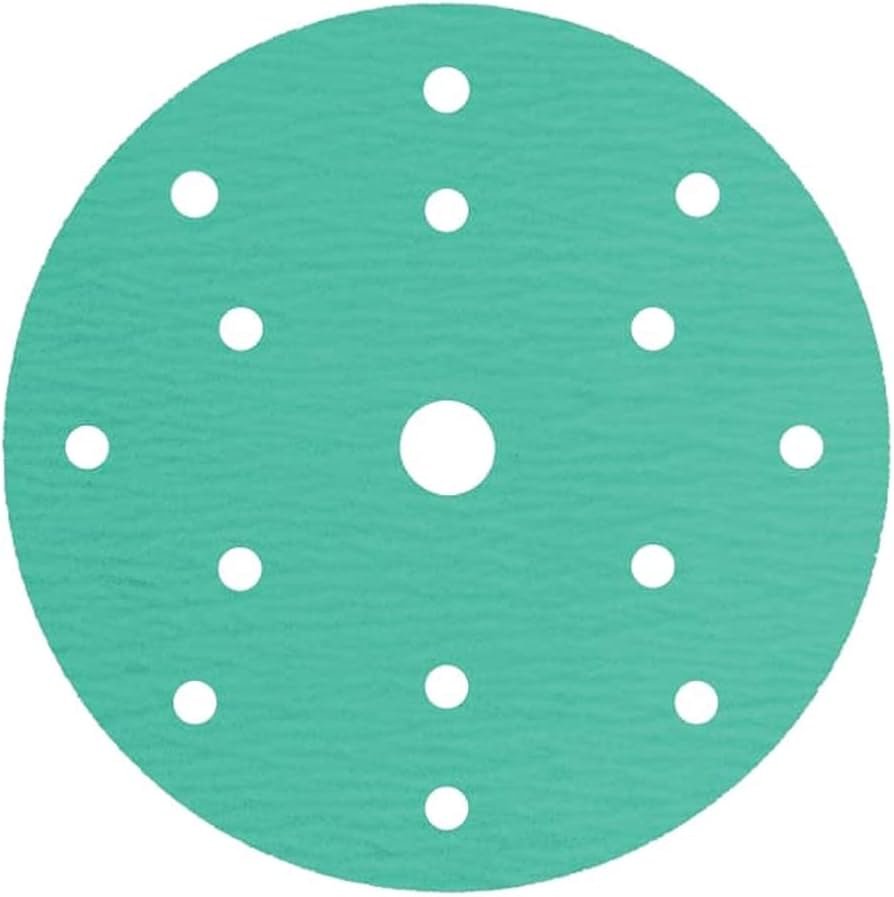
Klingspor PS77 discs are a solid everyday choice for good performance at a reasonable price.
Key points
- Durable aluminum oxide grain
- Smooth cut on hardwoods like oak, maple, and walnut
- Available in discs and sheets for both power and hand sanding
- Good balance between lifespan and cost
Keep 80, 120, 180, and 220 grit on hand, and you can handle most furniture and cabinet projects.
Mirka Abranet
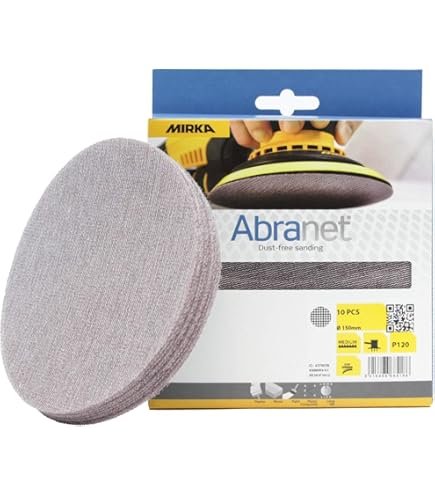
Mirka Abranet mesh sheets are popular with furniture makers and finish carpenters.
What makes them useful
- Open mesh design reduces clogging and works very well with vacuum blocks
- Flexible sheets wrap around profiles and mouldings without tearing
- Great for sanding between coats of paint or a clear finish
- Leaves a very consistent scratch pattern
If you’re sanding face frames, chair parts, or trim details before painting, Abranet makes the job smoother and cleaner.
Norton ProSand Sheets
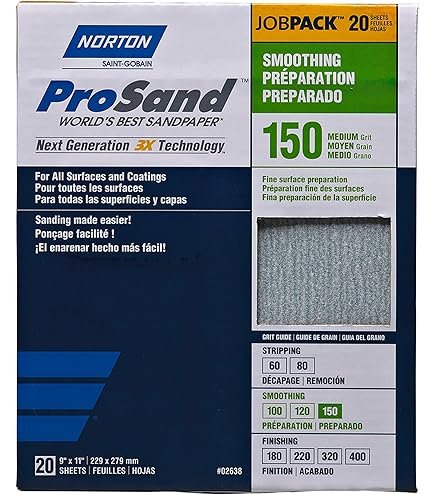
For hand sanding and sanding blocks, Norton ProSand is a reliable choice that does not strain your budget.
Why they’re worth buying
- Stearated coating reduces clogging, especially on softwoods
- Wide grit range for everything from rough shaping to finish sanding
- Easy to tear into smaller pieces for sanding blocks or hand pads
Use ProSand sheets for quick touch-ups on edges, end grain, or minor repairs where pulling out a sander would be overkill.
3M Wetordry™ Silicon Carbide
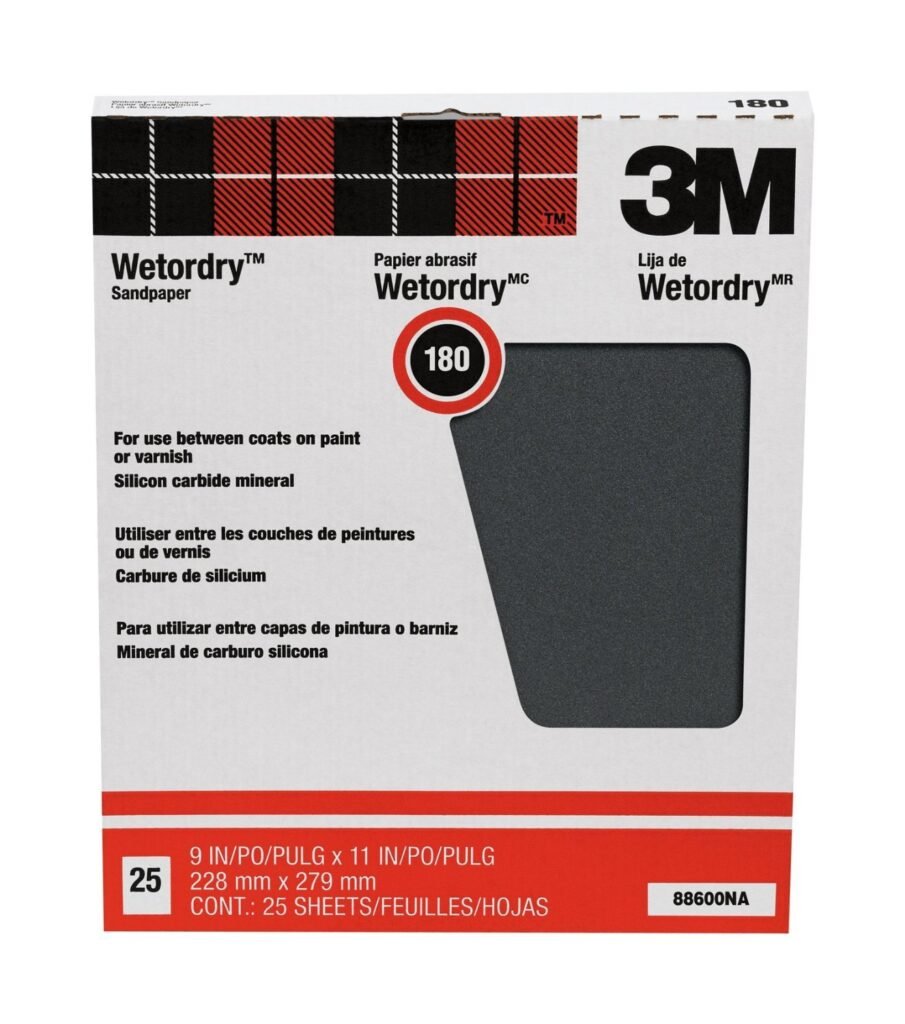
Once your stain or clear coat is on, the silicon carbide sheets shine. They’re excellent for levelling dust nibs and smoothing film build-up. If you’re repairing dents or imperfections before finishing, you may also want the best wood filler to fix problem spots before sanding.
Best uses
- Wet sanding between clear coats (polyurethane, lacquer, varnish)
- Levelling dust nibs and small runs
- Polishing to a higher sheen with excellent grits (1000–1500)
Use them with water or mineral spirits as a lubricant. This keeps the paper from loading and gives a smoother surface for your final coat.
Understanding Sandpaper Grit for Wood
Choosing the best sandpaper for wood starts with the proper grit sequence:
Coarse Grit (40–80)
- Removes saw marks and planer ridges
- Shapes edges, curves, and uneven stock
- Suitable for stripping old finishes from solid wood
Medium Grit (100–150)
- Removes coarse grit scratches
- Level the surfaces before stain or primer
- General prep for interior trim, shelves, and doors
Fine Grit (180–240)
- Final sanding on bare wood before stain or clear finish
- Reduces raised grain on soft woods
- Suitable for pre-finish sanding on cabinets and furniture
Very Fine & Polishing Grit (320–600+)
- Sanding between finish coats
- Smoothing clear film build-up
- Polishing to a semi-gloss or gloss surface
A typical sequence for furniture is 80 → 120 → 180 or 220 on bare wood, then 320–400 between coats of finish.
Hand Sanding vs. Machine Sanding
Both methods have their place.
Hand Sanding
- Best for edges, profiles, and small surfaces
- Lets you follow the grain and feel imperfections
- Use sheets or cut pieces on a flat sanding block
Hand sanding is significant on visible end grain and corners, where a power sander can round over too much.
Machine Sanding
- Random orbital sanders work well for large, flat areas
- Belt sanders help with heavy removal, but can gouge if you are not careful
- Detail sanders reach into tight spaces
Use the machine to do the heavy work, then finish by hand with the grain to remove swirls.
Sandpaper Materials Explained
Aluminum Oxide
- The most common abrasive for wood
- Durable and suitable for both hand and machine sanding
- Ideal general-purpose choice for most projects
Ceramic (Cubitron II, similar blends)
- Very hard, long-lasting grains
- Great for heavy sanding and big surfaces
- Costs more but lasts longer, which helps on large builds
Silicon Carbide
- Sharp, brittle grain
- Best for wet sanding and finish sanding
- Often used at higher grits (320 and up)
Garnet
- Natural abrasive with a smooth cutting action
- Suitable for hand sanding bare wood in mid to fine grits
- Wears out faster than synthetic abrasives
How to Choose the Best Sandpaper for Wood Projects
Ask yourself:
- What stage am I in?
- Rough shaping and levelling → start with 60–80 grit.
- General prep → 100–150 grit.
- Final bare wood sanding → 180–220 grit.
- Between coats or polishing → 320+ grit.
- How am I standing?
- Random orbital sander → discs (mesh or film).
- Hand sanding → sheets and sanding blocks.
- Detail sanding → flexible mesh sheets or small pads.
- What wood and finish am I using?
- Softwoods (pine, fir): avoid going too fine before staining, or the stain may not penetrate well.
- Hardwoods (maple, oak): work up to 180–220 for smooth, even colour.
- Painted projects: 120–150 before primer, 180–220 before topcoat.
Tips for Better Sanding Results
- Always sand with the grain on visible faces.
- Do not skip more than one grit step, or you may end up chasing scratches later.
- Wipe off dust between grits with a vacuum and a tack cloth.
- Change paper when it stops cutting efficiently; dull paper burns wood and wastes time.
- Use a flat sanding block on flat surfaces to avoid dips and waves.
FAQ
For most furniture, use aluminium oxide sheets or discs in 80, 120, 180, and 220 grits. Finish with 320 between coats of clear finish.
Start around 80–100 for rough surfaces, then go to 120–150, and finish at 180–220 before stain or clear coat.
Use 80–120 grit for stripping heavy paint on solid wood, then 150–220 to smooth before new primer and paint.
Some discs can be used with hand pads, but in general, discs are for machines, and sheets are for hand sanding and blocks.
Wet sanding with silicon carbide sheets (320+) is proper between clear coats to level and smooth the finish, not on bare wood.
DISCLAIMER:
This blog post is for informational purposes only. We make every effort to provide accurate, current, and well-sourced information, but we cannot guarantee its completeness or absolute accuracy.
All images, videos, and logos used on bestfordaily.com are the property of their respective owners. We aim to credit and reference them appropriately. If you are the rightful owner and wish to have your image, video, or logo removed, please get in touch with us.