- Topic: Best solar charger for backpacking in USA (2026 guide)
- Best for: Hiking, camping, thru-hikes, emergency phone power
- Panel sizes: 5W to 100W+
- Outputs: USB-A, USB-C (some models add DC)
- Updated: 2026
If you want the best solar charger for backpacking, focus on three things: real-world power in sun, pack size, and ports that match your gear. In the USA, most hikers use a solar panel to top up a power bank, then charge the phone at night. That setup is usually simpler than charging a phone straight from a panel.
| Solar Charger | Watts | Ports | Best Use | Approx. Price (USD) |
|---|---|---|---|---|
| BigBlue SolarPowa 28 | 28W | USB-A/USB | Backpacking + power bank top-ups | $60–$75 |
| X-Dragon 20W | 20W | USB-A | Budget backpacking | $30–$60 |
| FlexSolar 40W | 40W | USB-A/USB-C (varies by version) | Faster charging on camp days | $70–$90 |
| Goal Zero Nomad 5 | 5W | USB-A | Ultra-light day trips | $55–$65 |
| Jackery SolarSaga 100 | 100W | USB + DC (model dependent) | Base camp + power stations | $180–$220 |
| BioLite SolarPanel 100 | 100W | USB-A + USB-C | Higher-end 100W setup | $430–$460 |
Best Solar Charger for Backpacking Overall
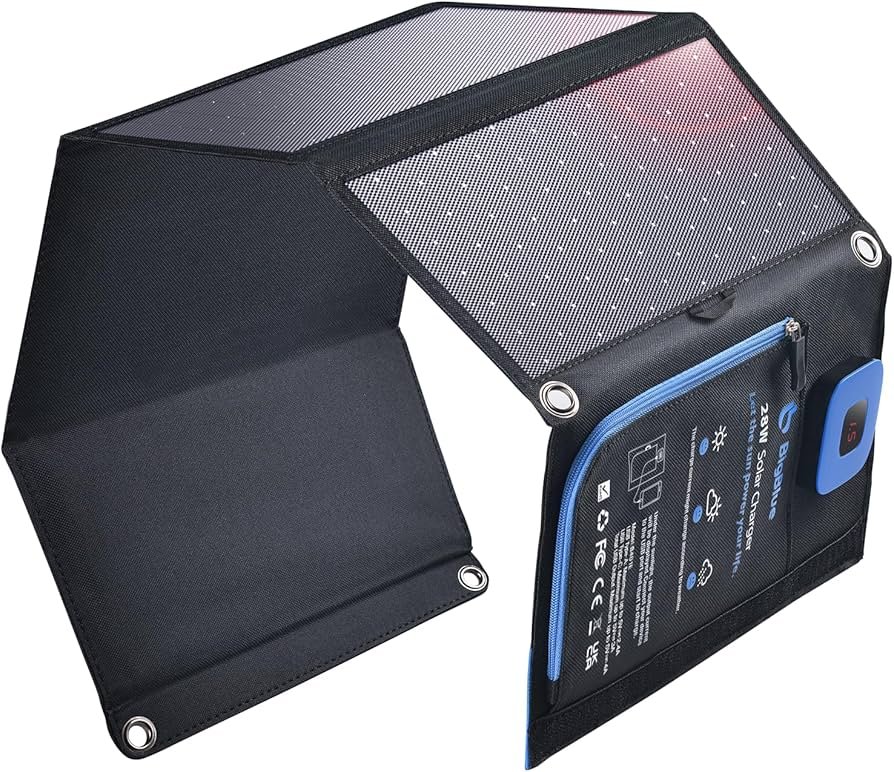
BigBlue SolarPowa 28
This is a strong pick for most hikers who want the best solar charger for backpacking without carrying a huge panel. The 28W size is still pack-friendly, and it gives enough output on sunny breaks to refill a power bank.
It’s also easy to hang on a pack during long walks. For best results, charge a power bank in the daytime, then charge your phone at night. That reduces “start-stop” charging when clouds pass.
Best Budget Solar Charger for Backpacking
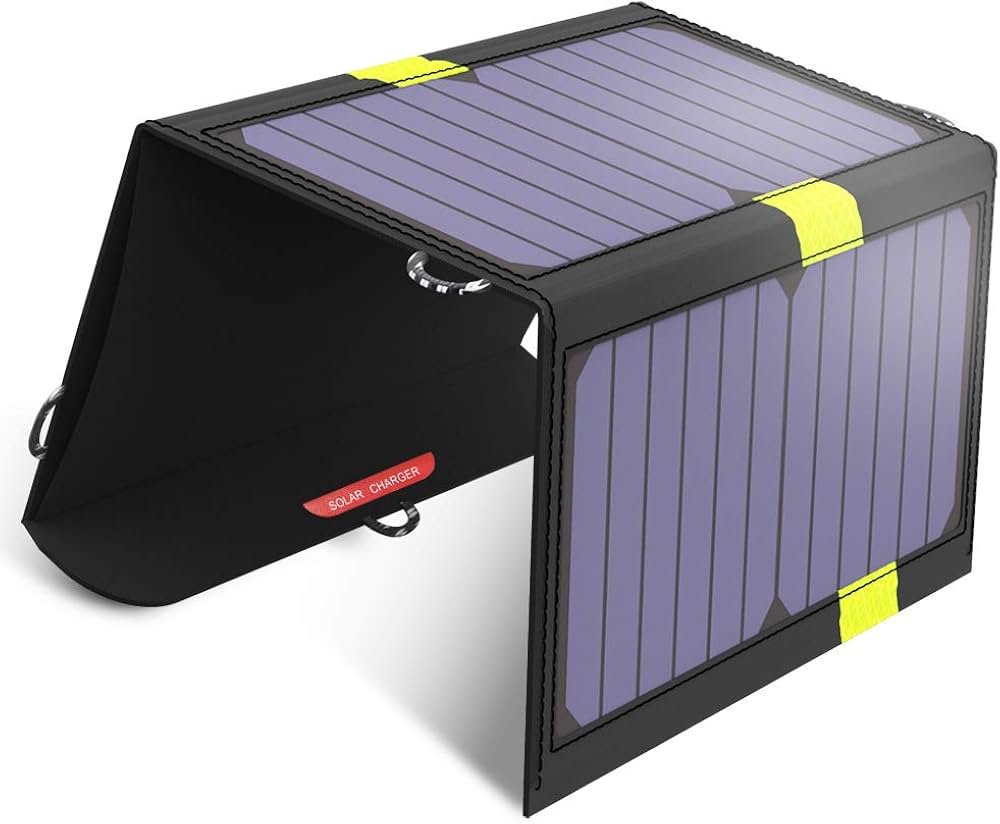
X-Dragon 20W
If you want a lower-cost choice, the X-Dragon 20W covers the basics. It’s light, folds down small, and can keep a phone or power bank topped up on bright days.
Budget panels usually drop power faster in haze or shade. So plan to charge during lunch stops, open areas, or camp when the sun is steady.
To plan your route and sun exposure better, a solid compass helps on long hikes. See best compass for hiking.
Best Medium Panel for Faster Charging
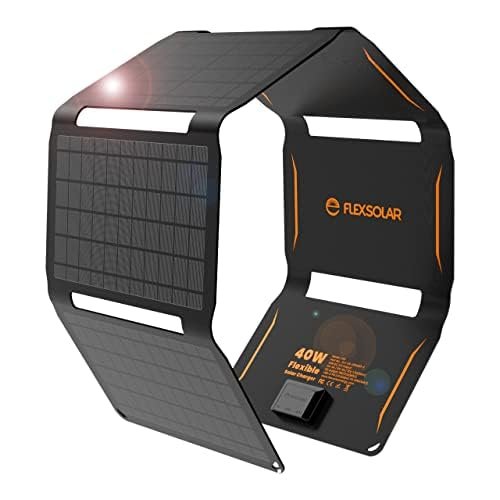
FlexSolar 40W
A 40W panel makes sense when you spend more time in camp or you need more charging headroom. FlexSolar 40W setups are popular for charging power banks quicker than smaller panels.
It can also charge more than one item if you manage cables well. Still, you’ll get the smoothest results by feeding a power bank first, then charging devices from the bank later.
Best Ultra-Light Solar Charger for Backpacking
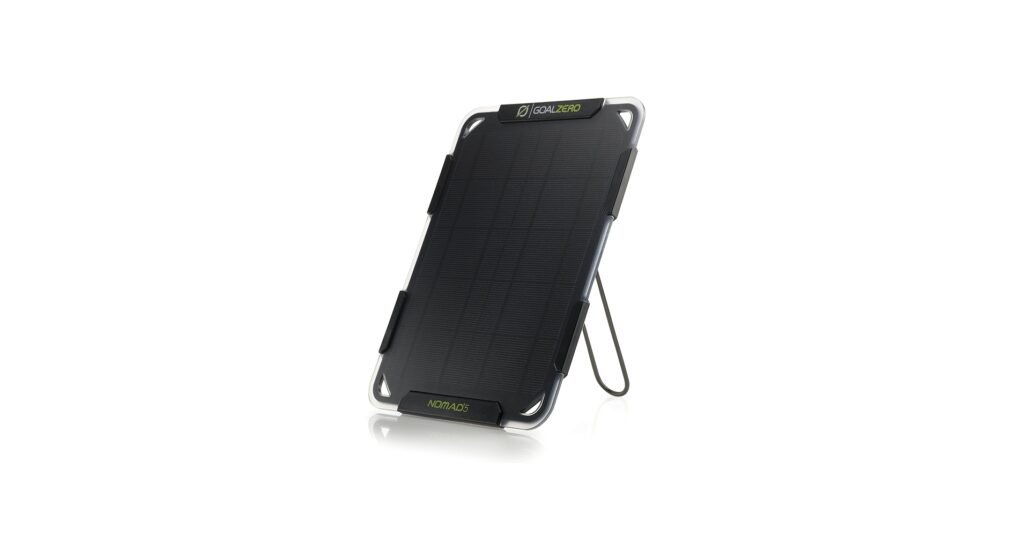
Goal Zero Nomad 5
If you only want a small panel for emergencies, the Nomad 5 is a compact option. It’s light and easy to aim at the sun with its built-in stand.
A 5W panel is slow for big power needs. But it can help keep a phone alive for maps or messages on short trips, especially when paired with a small power bank.
If you’re building a simple kit for weekend trips, add this to your basics list with best camping gear for beginners.
Best 100W Solar Charger for Base Camp
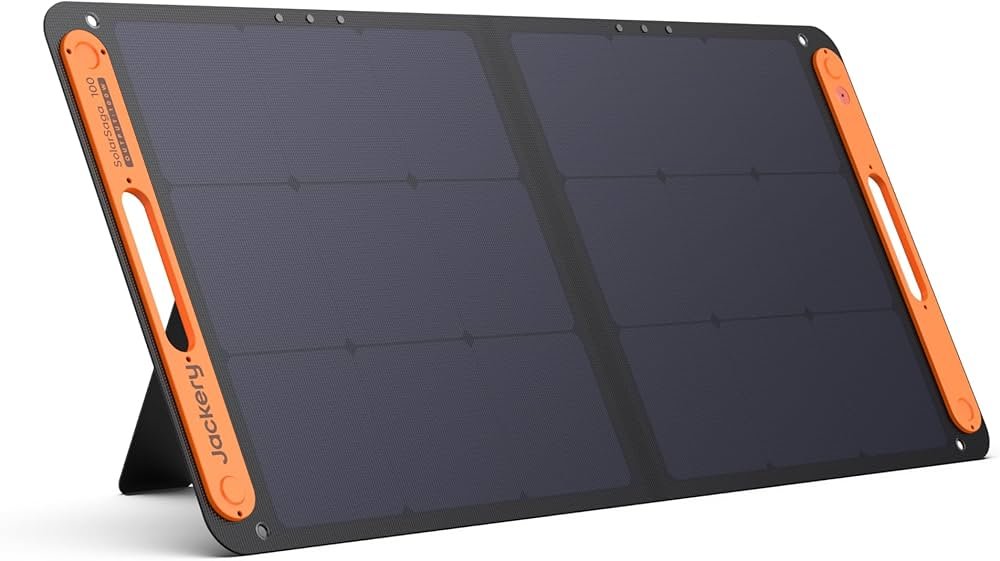
Jackery SolarSaga 100
If you camp in one place or use a power station, a 100W panel is a big upgrade. The SolarSaga 100 is built for higher output, so it’s better for charging larger batteries.
It’s not a typical “walk-all-day” backpacking panel. But for car camping, hunting camps, or longer base setups in the USA, it makes charging much easier.
Best Premium 100W Panel
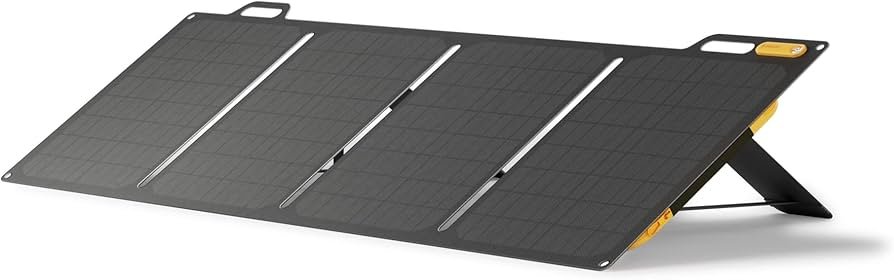
BioLite SolarPanel 100
This is a higher-priced 100W option with a strong focus on setup and aiming the panel. If you want a nicer user experience and you’re fine with the cost, it’s worth a look.
Like other 100W panels, it’s better for base camp use than true backpack carry. Think “camp power hub,” not “strap it to your pack.”
How to Choose the Best Solar Charger for Backpacking
Match watts to your trip style
- 5W–10W: short trips and backup power
- 20W–30W: most backpackers with a power bank
- 40W: faster charging when you have long sunny breaks
- 100W: base camp or power stations
Use a power bank between the panel and your phone
Panels output changes with clouds and angle. A power bank “buffers” that change and keeps charging steady.
Check ports before you buy
If your phone and bank use USB-C, a USB-C output helps. If you run older cables, USB-A is still fine.
If your trip includes longer nights or colder weather, your battery drops faster. A good shelter setup matters too, so compare best tent for hiking before your next USA trip.
FAQs
Yes, but results depend on the sun, angle, and panel size. A power bank between the panel and phone helps a lot.
For many hikers, 20W–30W is the sweet spot. It balances pack size and useful output.
You can, but it often charges on and off. Charging a power bank first is usually smoother.
They can work for base camp setups. For hiking all day, they are usually too large and heavy.
DISCLAIMER:
This blog post is for informational purposes only. We make every effort to provide accurate, current, and well-sourced information, but we cannot guarantee its completeness or absolute accuracy.
All images, videos, and logos used on this page belong to their respective owners. We aim to credit and reference them appropriately. If you are the rightful owner and wish to have your image, video, or logo removed, please contact us.